Stardust
City of GodStardust is presented in City of God as more than a song title or musical interlude. It is a standard whose remembered melody and lyric organize loneliness, romantic loss, and consolation, while its recurrence in the Midrash Jazz Quartet passages shows how popular music can carry meanings usually assigned to prayer, scripture, or ritual. The song’s power lies in that doubleness: it is intimate enough to summon a private past and broad enough to become a shared cultural form.
Appearance and Lyric Memory
Stardust first appears under the heading “STAR DUST” in the Midrash Jazz Quartet’s sequence, followed by the lyric beginning, “Sometimes I wonder why / I spend the lonely night / dreaming of a song?” The song therefore enters through a question about recollection itself. The lonely night is not merely a setting for romantic sadness; it is the condition in which memory becomes audible, turning absence into an imagined performance.
The lyric later reaches its consoling formulation in the line “is in the stardust of a song.” The image does not restore the lost relationship or return the singer to the earlier time. Instead, it relocates consolation into the song’s residue, as though the past survives as dispersed musical matter. Stardust is thus an image of preservation without recovery: what remains is not the beloved’s presence but the atmospheric trace carried by melody and words.
The Standard as a Self-Reproducing Form
The novel’s commentary on standards explains why Stardust can operate so forcefully as a literary object. When a song is a standard, it can reproduce itself from one of its constituent parts: reciting the words summons the melody, while humming the melody calls the words into the mind. This unusual self-reference is compared to limb regeneration or the cloning of a being from a single cell. Stardust consequently represents a form that is culturally repeatable yet personally singular, capable of reappearing in whole or in fragments whenever memory calls it up.
Standards from different periods remain cross-indexed in the brain, ready to arrive deliberately or unbidden. They can evoke the look, feel, and smell of earlier times with sudden poignancy, and they serve as signifiers of actions and relationships. In that framework, Stardust is not simply remembered music; it is a mechanism through which a person discovers what an experience has become. The song can expose the emotional condition attached to a relationship before the singer has consciously interpreted that condition.
Secular Hymn and Midrashic Commentary
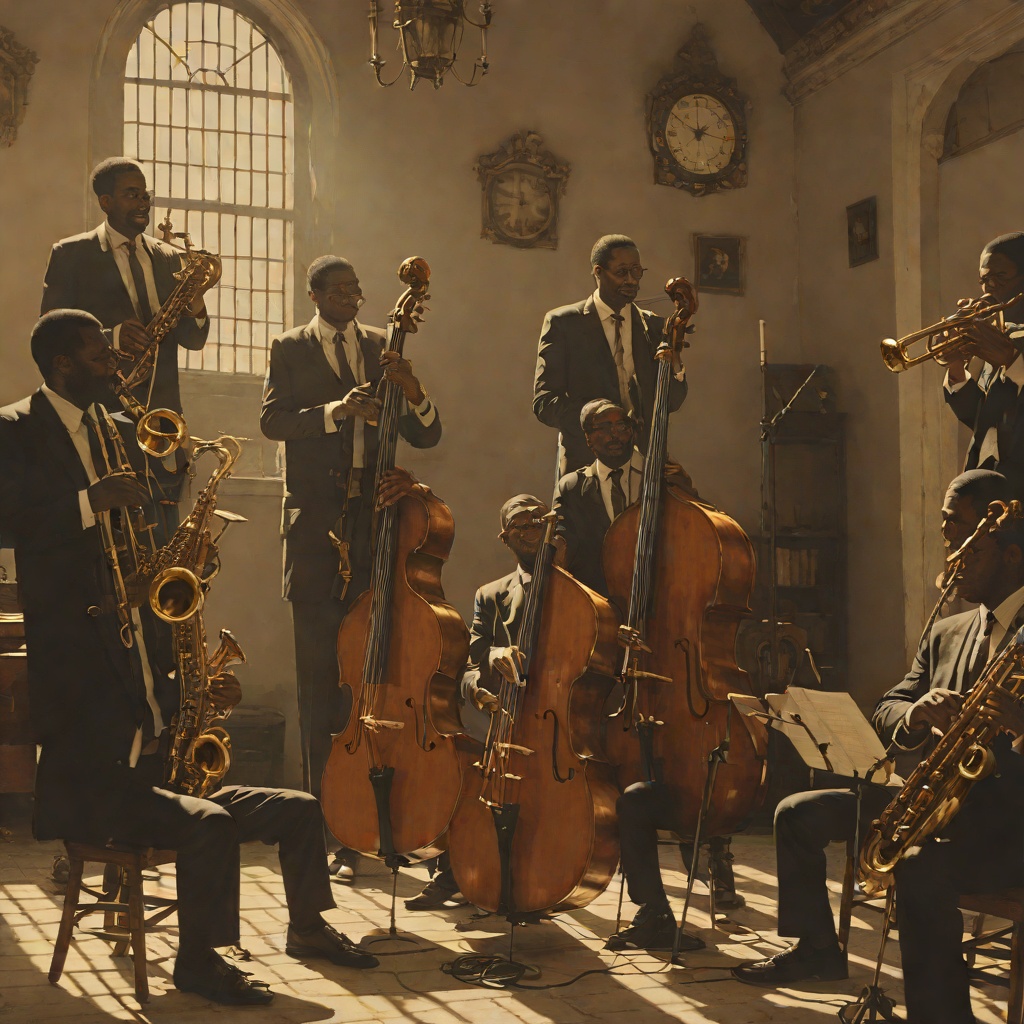
The song belongs to a section explicitly titled “The Midrash Jazz Quartet Plays the Standards.” By placing Stardust inside a midrashic structure, the novel treats a popular ballad as material for interpretive commentary rather than as decorative entertainment. The quartet’s standards function like secular texts whose familiar words can be reread for existential and theological implications. Stardust’s language of loneliness and consolation therefore participates in the book’s larger inquiry into how belief is made, inherited, performed, and tested.
The novel also argues that popular ballads are often secularized hymns. Their romanticism ennobles or idealizes life, expresses pieties, and remains accessible to ordinary voices. Stardust’s easy recognizability and emotional directness make it especially suited to this role. Its apparent simplicity does not empty it of seriousness; instead, simplicity permits the song to circulate among private memory, public performance, and religiously inflected reflection.
Origins, Lullabies, and Human Feeling
The book’s meditation on song reaches back before formal religion. It suggests that the first songs may have been lullabies and that mothers may have learned singing by imitating moving water: gurgles, cascades, flows, floods, and spills. Rhythm becomes the rocking of a water hammock, while melody becomes the sound of water responding to a child’s movement. This account places music at the beginning of embodied human care, before the division between sacred and secular expression.
That origin story clarifies Stardust’s emotional force. Songs soothe, but they also contain the violence and terror that soothing tries to master. Lullabies can lull a child to sleep while imagining falling from a tree, and they teach the immanence of feeling’s opposite. Stardust similarly joins tenderness to loss: its consolation depends on the loneliness it cannot abolish. The song’s emotional structure is therefore not simple reassurance but a recognition that comfort carries the knowledge of absence within it.
Cultural Continuity and Narrative Function
The song’s printed credit identifies it as an excerpt from “Star Dust,” with words by Mitchell Parish and music by Hoagy Carmichael, copyrighted in 1929 and represented through the listed publishing rights. This bibliographic notice reinforces the novel’s interest in standards as historical artifacts: a song passes through composers, performers, publishers, permissions, and listeners before becoming part of an individual’s inner life.
Stardust consequently links cultural repetition with personal transformation. Its melody can be reproduced by countless voices, yet each recurrence retrieves a different emotional scene. Within the Midrash Jazz Quartet framework, that capacity makes the song a portable interpretive text, one that moves between night and memory, romance and mourning, hymn and ballad. Its decisive significance is that it makes consolation audible without pretending that what has been lost can be restored.